Table of Contents
Key Takeaways
- Digital forensics in cybersecurity involves collecting, preserving, analyzing, and reporting digital evidence after a suspected incident.
- It helps organizations determine how an attack started, what systems or data were affected, and what actions are needed next.
- Digital forensics and incident response work together through DFIR, helping teams contain threats while preserving evidence.
- Investigations may involve endpoints, network traffic, email systems, cloud platforms, mobile devices, and identity logs.
- Strong logging, asset inventories, retention policies, and incident response plans can improve forensic readiness before an incident occurs.
Digital forensics is the process of identifying, collecting, preserving, analyzing, and reporting digital evidence after a suspected cybersecurity incident. For cybersecurity professionals, IT security teams, business leaders, and organizations preparing for or responding to cyber incidents, especially in Japan and the Asia-Pacific region. It provides the factual basis for understanding what happened and deciding what to do next.
When an organization experiences ransomware, unauthorized access, phishing, data loss, or suspicious employee activity, digital forensics helps answer the questions that matter most:
- What happened?
- How did the incident begin?
- Which systems, accounts, or data were affected?
- Did the attacker access, change, or remove information?
- What should the business do next?
In cybersecurity, digital forensics is not only used for criminal investigations or court cases. It also helps businesses preserve evidence, support legal, insurance, and compliance obligations, guide recovery and incident response decisions, and reduce the likelihood of the same issue recurring. This article explains what digital forensics is for, how it differs from incident response, the main steps and types of forensic investigation, common challenges, how to prepare for an investigation, and how findings can improve security after an incident.
What Is Digital Forensics?
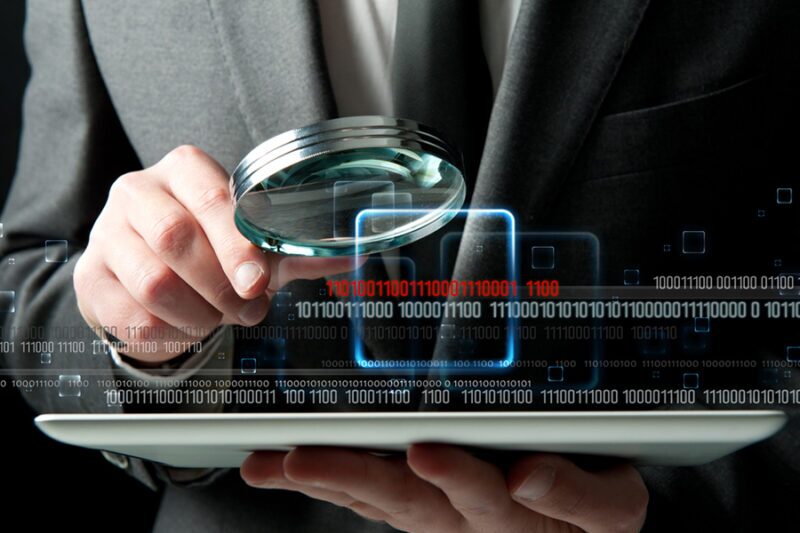
Digital forensics, sometimes called computer forensics or cyber forensics, is a specialized area of cybersecurity and forensic science focused on investigating digital evidence to support businesses and law enforcement agencies in cybercrime investigations. It is essential in investigating cyber offenses by providing insights for law enforcement.
That evidence can come from many sources, including:
- Laptops, desktops, and servers
- Network traffic and firewall logs
- Email systems
- Mobile devices
- Cloud platforms
- SaaS applications
- Identity and access logs
- Security monitoring tools
- File systems and backups
These sources often include digital devices, computer systems, personal computers, and storage media.
The purpose is to build a reliable picture of an incident without altering or losing important evidence. For example, after a ransomware attack, digital forensic investigators may review endpoint activity, authentication logs, emails, network connections, and cloud records. This can help determine whether the attack began with phishing, stolen credentials, exposed remote access, malware, or another weakness.
Why Digital Forensics Matters in Cybersecurity
Cybersecurity tools can alert teams to unusual activity. Digital forensics is a critical component of cybersecurity because it helps teams analyze digital evidence after security incidents, including security breaches, data breaches, network breaches, and cyberattacks.
A single alert may not show whether an attacker entered the environment, moved between systems, accessed sensitive data, or caused lasting damage to digital assets or compromised data. Forensic analysis helps connect those events into a timeline.
Digital forensics can help organizations:
- Confirm whether a security incident occurred
- Identify affected devices, systems, and user accounts
- Preserve evidence before it is lost or changed
- Understand the likely cause of the incident
- Support recovery and remediation decisions
- Meet legal, compliance, insurance, or reporting obligations
- Improve security controls after an incident
For businesses in Japan, this matters because cybersecurity guidance from the Information-technology Promotion Agency and the Ministry of Economy, Trade and Industry emphasizes preparation, incident response, analysis of attack methods, and prevention of recurrence; findings also strengthen defenses against current and future cyber threats by showing what happened and which controls failed.
Digital Forensics vs. Incident Response
Digital forensics and incident response are closely related, but they have different purposes.
Incident response focuses on stopping and managing an active threat. This may include isolating devices, disabling compromised accounts, blocking suspicious traffic, removing malware, and restoring systems. During active incidents, a digital forensics investigator or other digital forensics experts may work alongside responders to support the investigation.
Digital forensics focuses on evidence. It helps teams understand what happened, how it happened, and what information may have been affected.
Together, they are often referred to as DFIR, or digital forensics and incident response.
A DFIR process helps organizations collect evidence quickly while preserving the information needed for later analysis, reporting, insurance claims, legal review, or security improvements.
The Main Stages of a Digital Forensic Investigation
A reliable digital forensic investigation follows a structured process. While the exact steps vary by incident, the digital forensics process typically treats evidence collection, data acquisition, analysis, and reporting as key components of digital forensic investigations, with these techniques applied in sequence to analyze data.
1. Identification
The first step is identifying possible sources of evidence.
This may include affected computers, servers, cloud accounts, email systems, mobile devices, network appliances, and security logs. Investigators also define the likely time frame of the incident and identify which users, systems, or business processes may be involved.
The goal is to reduce uncertainty quickly and avoid collecting unnecessary data.
2. Collection
During collection, investigators gather relevant digital evidence without changing the original data.
This often includes collecting and extracting data from affected systems using specialized tools while preserving evidential integrity.
This may include:
- Disk images from storage media and related computer hardware, sometimes created through forensic imaging as a bit-for-bit replica that preserves deleted space
- Security and system logs
- Email records
- Cloud audit logs
- Firewall and VPN records
- Endpoint detection alerts
- Network captures
- Authentication activity
- Malware samples
- Memory captures from active systems and other relevant computer hardware
Some evidence is volatile, meaning it can disappear when a system is restarted or shut down. Memory, active processes, open connections, and temporary files may need to be collected quickly during a live investigation.
3. Preservation
Preservation protects the integrity of the evidence.
Investigators typically record when evidence was collected, who handled it, where it was stored, and what actions were taken. This is often referred to as the chain of custody.
Preservation is important even when an incident is not expected to go to court. It helps ensure the findings are reliable, repeatable, and useful for internal reviews, insurers, regulators, and external specialists.
4. Analysis
The analysis phase is where investigators analyze data and digital evidence to explain what happened.
They may review login attempts, file activity, system logs, browser records, network connections, email headers, cloud activity, and malware behavior, using metadata analysis to examine creation dates and authorship, timeline analysis to reconstruct events from file and log timestamps, and correlations across multiple computer drives. This can help identify:
- Initial access methods
- Unauthorized account use
- Lateral movement between systems
- Malware persistence
- Privilege escalation
- File encryption or deletion
- Possible data exfiltration
- Security control failures
It may also involve recovering deleted files or data through methods such as file carving or scanning slack space to reconstruct deleted documents.
The result is often a timeline that shows the sequence of events from initial compromise through discovery and containment.
5. Reporting
A digital forensic report presents findings in a clear, usable format, with detailed findings suitable for technical, business, legal, or insurance review.
It should include the scope of the investigation, sources of evidence, methodology, timeline, key findings, likely business impact, and recommended next steps.
Technical details are important, but the report should also help business leaders understand the operational impact and decide what actions to prioritize.

Types of Digital Forensics in Cybersecurity
Different incidents require different forms of forensic investigation.
Endpoint and Computer Forensics
Endpoint forensics examines laptops, desktops, servers, and other devices. This work relies on digital forensics tools and specialized hardware and software to acquire and examine data from operating systems.
Investigators may review file systems, user activity, installed applications, registry entries, scheduled tasks, browser history, USB activity, and operating system logs to reconstruct activity on an affected device. Modern forensic platforms such as EnCase, FTK, and The Sleuth Kit support evidence collection, disk-image analysis, file recovery, and documentation.
This type of analysis is often useful in ransomware incidents, malware investigations, insider threats, and suspected data theft.
Network Forensics
Network forensics focuses on traffic moving across a network, and investigators analyze network data to detect attacker movement and other signs of compromise.
Investigators may review firewall logs, VPN activity, DNS queries, proxy logs, packet captures, and network flow records to support threat detection during security breaches or cyber attacks. This can help identify suspicious connections, command-and-control activity, and potential data transfer outside the organization.
Cloud Forensics
Cloud forensics investigates activity in cloud environments such as Microsoft 365, Google Workspace, AWS, Azure, and other hosted platforms. However, the nature of cloud computing introduces unique challenges to these investigations. Forensic teams must carefully navigate complex issues related to shared infrastructure, multi-tenancy, data sovereignty, and cross-border jurisdiction.
Cloud investigations often rely on audit logs, access records, configuration history, file-sharing activity, mailbox activity, identity events, and provider-generated alerts.
Because cloud services are shared and distributed, organizations need robust logging, access governance, and retention practices in place before an incident occurs.
Mobile Device Forensics
Mobile device forensics examines evidence from smartphones and tablets.
Depending on the device, mobile operating system, and available legal authority, this can include messages, application data, photos, call records, location data, authentication information, and cloud backups.
Mobile investigations can be relevant when employees use personal devices for work communications, multi-factor authentication, remote access, or business applications.
Memory and Malware Forensics
Memory forensics examines data stored in RAM, using live analysis to analyze volatile data such as encryption keys and unsaved documents. This can reveal active processes, malicious code, credentials, injected software, and network connections that may not be visible in traditional disk analysis.
Malware forensics examines suspicious files or scripts to understand how they operate, maintain access, and what damage they may have caused.
These methods are especially useful when malware attempts to hide, delete evidence, or operate without writing many files to disk.
How Digital Forensics Supports Incident Response
Digital forensics is most valuable when it is part of an organized incident response process and broader handling of cybersecurity incidents.
During an active cyber incident, teams must balance speed with evidence preservation. Isolating a device may stop an attacker, but shutting it down too early could remove valuable memory evidence. Changing passwords may be necessary, but it is also important to preserve identity logs that show how the account was used.
A coordinated DFIR process may include:
- Isolating affected systems
- Preserving endpoint and memory evidence
- Exporting cloud and identity logs
- Reviewing email activity
- Blocking malicious activity
- Assessing possible data exposure
- Restoring systems safely
- Updating controls and response procedures
The findings can also help organizations improve security after the incident by identifying gaps in monitoring, access control, patch management, logging, training, backups, or third-party access, thereby supporting threat detection and helping protect against future threats.
Common Challenges in Digital Forensics
Modern investigations are more complicated because business data is spread across many devices, cloud services, applications, and identities.
Common challenges include:
- Large volumes of logs and digital evidence
- Short log retention periods
- Encrypted devices and communications
- Incomplete asset inventories
- Remote and hybrid work environments
- Use of personal devices
- Cloud data stored across multiple locations
- Sophisticated malware that hides activity
- Limited visibility into third-party services
- Cross-border privacy and data-handling requirements
Preparation can reduce these challenges. Businesses that maintain current asset inventories, centralized logs, clear retention policies, tested backups, and incident response plans are generally in a stronger position to investigate and recover from cyber incidents.
How Businesses Can Prepare for a Digital Forensic Investigation
Organizations should not wait until a breach occurs to think about forensic readiness.
Useful preparation steps include:
- Maintain an accurate inventory of devices, systems, applications, and cloud services
- Enable logging for endpoints, identity systems, email, firewalls, and cloud platforms
- Set appropriate log retention periods
- Centralize important security telemetry
- Document incident response procedures
- Test backups and recovery plans
- Limit unnecessary access privileges
- Review third-party and vendor access
- Run incident response tabletop exercises
- Establish contacts for external cybersecurity and forensic support with a solid understanding of both technical and legal requirements
Forensic readiness helps organizations move faster and make better decisions during a high-pressure incident.
Take the Next Step Toward Better Cyber Resilience
Digital forensics helps organizations understand what happened after a cyber incident, preserve evidence, and reduce the risk of recurrence.
EIRE Systems supports businesses across Japan and the Asia-Pacific region with practical IT security services, assessments, and incident response guidance. Contact EIRE Systems to discuss the right next step for your security posture.
FAQs About Digital Forensics
What is the difference between digital forensics and incident response?
Incident response focuses on detecting, containing, removing, and recovering from an active threat. Digital forensics focuses on collecting and analyzing evidence to explain what happened. DFIR combines both approaches.
How long does a digital forensic investigation take?
A focused investigation involving one device may take days. A larger incident involving multiple systems, cloud accounts, encrypted data, or third parties may take weeks or months. The timeline depends on the volume of evidence, complexity of the environment, and business or legal requirements.
What evidence can digital forensics collect?
Digital forensics can examine files, logs, emails, network traffic, user activity, cloud audit records, memory, mobile data, backups, and other digital artifacts relevant to an investigation. It can also include database forensics when investigators need to validate transactions, record changes, and other structured activity. Forensic data analysis examines structured data for financial crimes such as fraud.
Can digital forensics help after ransomware?
Yes. Forensic analysis can help identify how ransomware entered the environment, which systems were affected, whether attackers moved laterally, and whether sensitive data was accessed or transferred.
Are digital forensic tools enough to solve an investigation?
No. Tools can collect and organize information, but skilled analysts are needed to interpret findings, validate evidence, document actions, and explain the business impact.
Sources:
- Exterro. (n.d.). FTK forensic toolkit. https://www.exterro.com/digital-forensics-software/ftk-forensic-toolkit
- Information-technology Promotion Agency, Japan. (2023). Information security measures guidelines for small and medium-sized enterprises (Version 3.1). https://www.ipa.go.jp/en/about/activities/gg62ps000000103j-att/Information_Security_Measures_Guidelines_for_Small_and_Medium-sized_Enterprises_Version_3-1.pdf
- Kent, K., Chevalier, S., Grance, T., & Dang, H. (2006). Guide to integrating forensic techniques into incident response (NIST Special Publication 800-86). National Institute of Standards and Technology. https://nvlpubs.nist.gov/nistpubs/Legacy/SP/nistspecialpublication800-86.pdf
- Ministry of Economy, Trade and Industry. (2023). Cybersecurity management guidelines (Version 3.0). https://www.meti.go.jp/policy/netsecurity/downloadfiles/CSM_Guideline_v3.0_en.pdf
- OpenText. (n.d.). OpenText forensic (EnCase).https://www.opentext.com/products/forensic
- Sleuth Kit Labs. (n.d.). The Sleuth Kit and Autopsy.https://www.sleuthkit.org/
About the Author: Colin Silvester

Colin Silvester is General Manager at EIRE Systems and an experienced technology leader with more than two decades in IT and management. His background spans IT security, corporate governance, digital transformation, and technology strategy, complemented by postgraduate study in cybersecurity.